
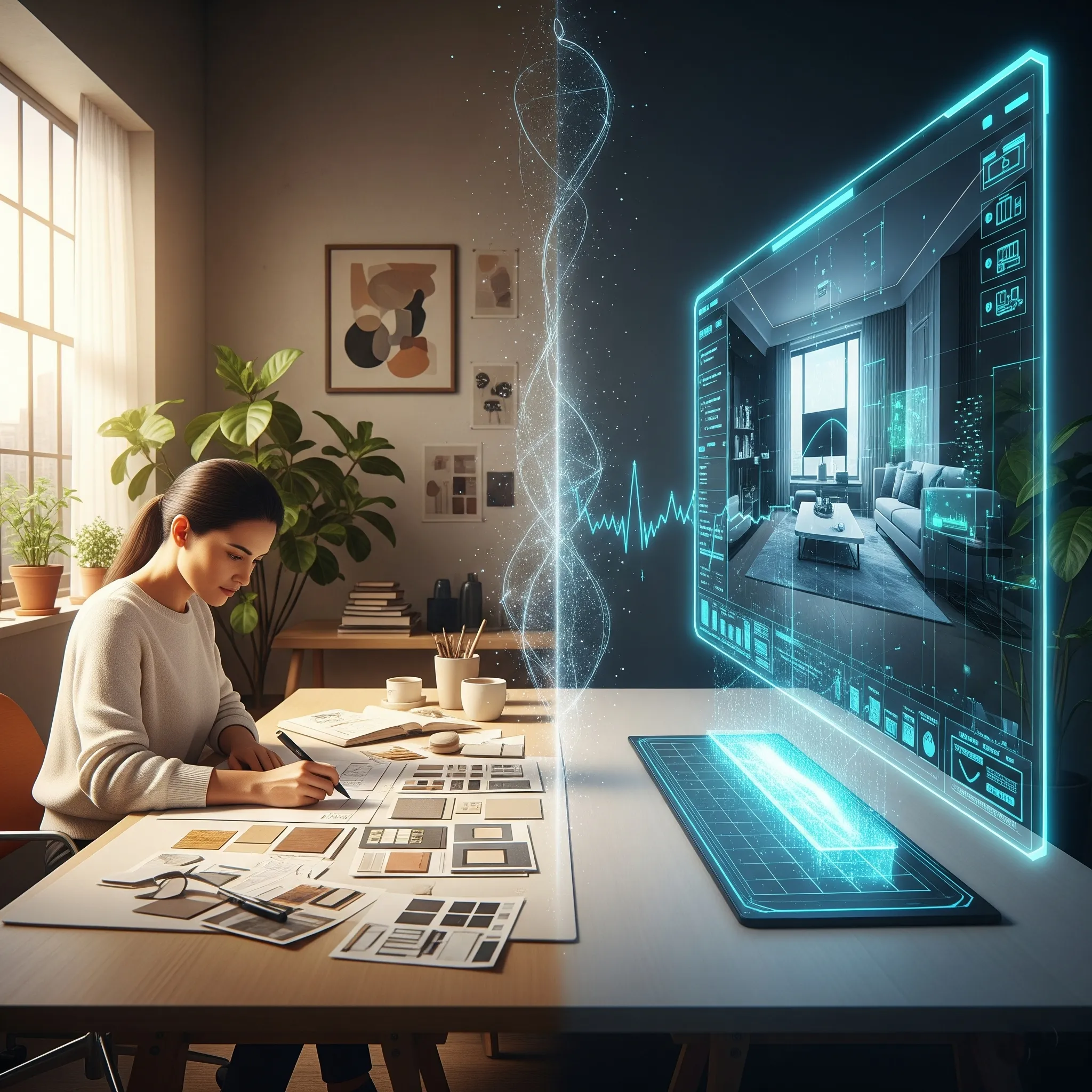
Artificial intelligence is transforming industries—from finance and healthcare to education and customer service. But what about interior design? Can AI truly replace the foundational skills of a trained designer? AI room planners and design generators are growing more sophisticated. As a result, more professionals and homeowners are beginning to ask this question.
Let’s explore where AI stands today—and whether it can truly beat the basics.
1. Understanding Space: AI’s Biggest Hurdle
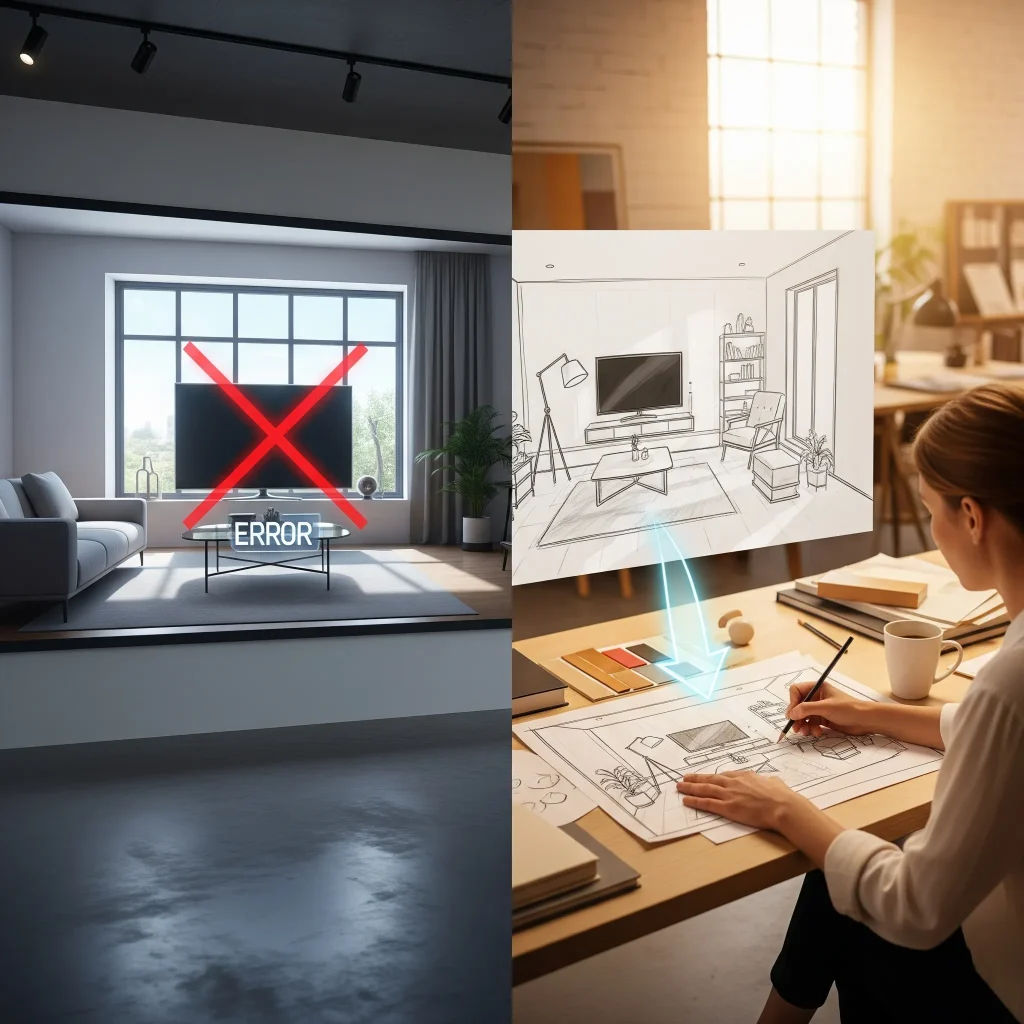
Basic interior design starts with space planning—understanding how people live, move, and interact within a room. AI can crunch dimensions, suggest furniture layouts, and optimize flow. However, it lacks real-world context and intuition.
Verdict: AI is great at technical layout. However, it struggles with lived-in logic. AI doesn’t know that a reading nook needs natural light. It also doesn’t understand that the TV shouldn’t face a window.
2. Style & Aesthetic Choices: Learning by Pattern
AI tools like Midjourney and DALL·E can generate jaw-dropping room mockups in seconds. But they rely on patterns from data—meaning they remix what’s popular, not necessarily what fits your personality or story.
Verdict: AI can suggest trends and visualize moods, but it doesn’t yet “feel” your taste like a human designer can.
3. Material & Texture Selection: Still a Sensory Game
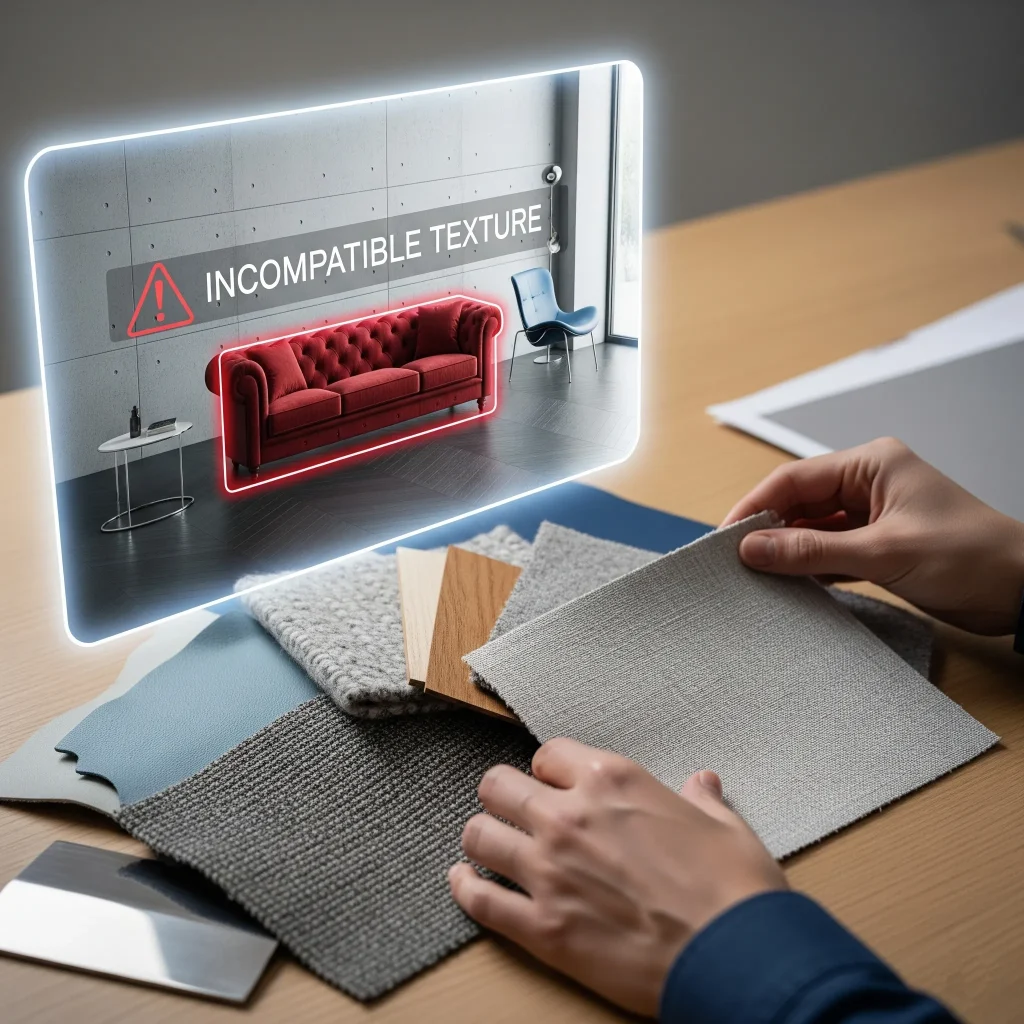
Choosing materials isn’t just about how they look—it’s about how they feel, age, and react in different lighting. AI lacks sensory input: it can’t touch a fabric, test a sample under natural light, or sense acoustic impact.
Verdict: AI can recommend materials based on style and function, but human designers still own the sensory experience.
4. Client Communication & Emotional Design: A Human Strength
A big part of design is understanding people—asking the right questions, interpreting emotions, and translating vague ideas into concrete visuals. AI lacks empathy, nuance, and emotional intelligence.
Verdict: AI can assist, but it can’t connect. Emotional design still belongs to the human brain and heart.
5. So, Will AI Beat the Basics?
Not quite. Right now, AI is best used as a powerful design assistant. It can generate mood boards. AI can organize floor plans. It can even recommend products. But the creative heart of interior design—the empathy, vision, and problem-solving—remains a human skill.
Conclusion:
Don’t ask if AI will replace designers. Instead, ask a better question: How can designers use AI to elevate their work? Like Photoshop changed graphic design, AI will reshape interiors—but it won’t replace the creative soul behind great spaces.
What do you think? Would you trust an AI to design your home? Let us know in the comments below!

YOUR COMMENT